I'm the Captain I Make Ship Happen: A Designer's Review
As someone who spends their days staring at hoops and thread bobbins, I know that a design file is only as good as the finished product it creates. When I first pulled up I m the Captain I Make Ship Happen Funny, my immediate reaction was one of amusement followed by professional scrutiny. This isn't just another generic pun; it carries a specific energy that fits perfectly into the world of nautical-themed gifts and playful apparel. However, before I commit this to a client order or an Etsy listing, I need to break down how this Graphics asset translates from a digital screen to a stitched reality.
First Impressions: Visual Weight and Mood
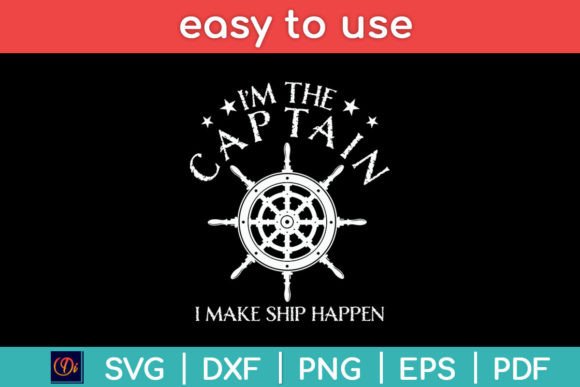
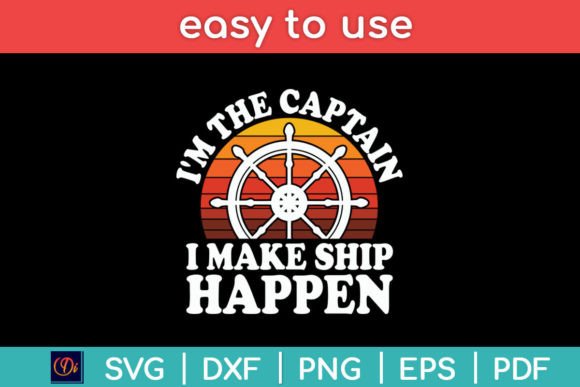
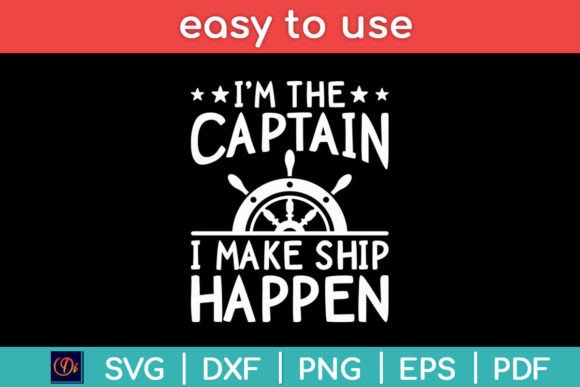
The phrase itself is bold, confident, and undeniably cheeky. In the realm of machine embroidery design, typography is king. The layout of I m the Captain I Make Ship Happen Funny suggests a layout that relies heavily on text hierarchy rather than complex iconography. This is actually a strength for many reasons. Simple text-based designs often stitch cleaner than those cluttered with tiny details that can get lost in the weave of the fabric.
When I visualize this on a tote bag design or a heavy cotton sweatshirt, the mood shifts instantly from "nautical" to "personality-driven." It feels like a statement piece. For a small business owner looking to create handmade products that stand out in a crowded market, this kind of visual personality is essential. It invites a smile, which is exactly what you want when selling a personalized gift. The challenge lies in ensuring the font choice within the file supports the humor without sacrificing legibility.
Testing the Waters: Real-World Application
Let's talk about a real scenario. Imagine a client wants a custom embroidered apron for a wedding party where the couple loves sailing, or perhaps a group of friends starting a new boating club. You load I m the Captain I Make Ship Happen Funny into your machine. Because this is originally described as a print cut file compatible with Cricut and Silhouette machines, we have to pause. If you are using this for embroidery, you must ensure you have the correct embroidery file format (like .PES, .DST, or .JEF) or convert the vector data carefully.
If you are working with a converted file, the stitch density becomes your primary concern. Text-heavy designs can easily become dense if the fill stitches aren't optimized. On a thick canvas tote bag, high density might cause puckering. On a thin baby embroidery item, it could make the fabric stiff and uncomfortable. I always recommend testing the design on scrap fabric first. Does the running stitch outline hold its shape? Is the fill stitch even, or does it leave gaps?
For custom apparel, particularly sweatshirt embroidery, this design shines. The soft fleece provides a forgiving background for the text. However, if you plan to put this on a cap or a curved surface, you need to be wary. Curved surfaces distort text. If the design has long lines of text, they might bow awkwardly on a baseball cap unless the design is specifically engineered for curved hooping. In such cases, breaking the text into smaller segments or choosing a different placement, like the front panel of a hoodie, is the smarter move.
Navigating Fabric and Hoop Constraints
One of the most critical aspects of using I m the Captain I Make Ship Happen Funny is matching it to the right hoop size. Long phrases require wide hoops. If your hoop is too small, you risk stitching over the same area multiple times, leading to bulk and potential thread breaks. Always check the dimensions of the design against your machine's capabilities.
Fabric texture also plays a massive role. On a smooth poplin shirt, the thread colors will pop beautifully. But on a textured linen or a heathered grey knit, the contrast might suffer. I suggest reviewing printable mockups in both black and white to see if the text remains readable against different backgrounds. Dark fabrics require light thread, but be careful with satin stitch borders on dark knits; the shine of the satin stitch can sometimes look messy if the underlying fabric moves too much during stitching.
Furthermore, consider the end-use. If this is a kitchen towel or a tea towel meant for frequent washing, the stabilizer choice is non-negotiable. You need a tear-away or wash-away stabilizer that leaves no residue but holds the stitches tight enough to survive the agitation of a washing machine. Without proper stabilization, the letters might curl or pucker after the first few washes, ruining the finished product.
Commercial Viability and Brand Consistency
For the Etsy seller or small shop product creator, this design offers excellent potential for holiday sales. Think Valentine's Day, anniversaries, or summer boat parties. It fits perfectly into the category of holiday embroidery and personalized items. However, as a designer, I must remind you to confirm licensing. Just because a file is available doesn't mean you can sell the physical items made from it without checking the terms. Some licenses restrict commercial use, while others allow unlimited production.
Using I m the Captain I Make Ship Happen Funny consistently across your brand can build recognition. If you offer this as part of a collection—perhaps alongside other nautical puns—you create a cohesive line that customers can trust. It adds value to your craft business by showing that you curate designs with character. Customers buy the story behind the product, and a funny, well-executed design tells a great story.
Final Verdict for the Maker
I m the Captain I Make Ship Happen Funny is a strong contender for your next project, provided you respect the technical requirements of embroidery. It is not a design to be rushed. Take the time to test it on your specific fabric, adjust your tension if needed, and choose thread colors that enhance the humor rather than obscure it. Whether you are making a pillow cover, an embroidered patch, or a full commercial embroidery run, this design has the potential to be a best-seller if executed with care.
Remember, the difference between a hobbyist project and a professional digital product or handmade good often comes down to these small details. Check your design assets, verify your hoop size, and don't skip the test stitch. With the right preparation, this punny phrase will sail smoothly through your machine and straight into the hearts of your customers.