Paint Me Green and Call Me a Pickle Svg Review
As a designer who has spent years navigating the intersection of digital files and physical stitching, I approach every new machine embroidery design with a critical eye. The market is flooded with Graphics that look perfect on a screen but fall apart under the needle. Today, I am evaluating the Paint Me Green and Call Me a Pickle Svg. While this specific file is marketed primarily for cutting machines like the Cricut Explore, Silhouette Cameo, or Maker, the aesthetic principles and potential applications are highly relevant to us in the embroidery world. Many of us convert these vector shapes into stitch files or use them as templates for applique designs. Let's dive into how this playful concept translates from a digital download to a tangible, high-quality finished product.
First Impressions: Visual Personality and Design Mood
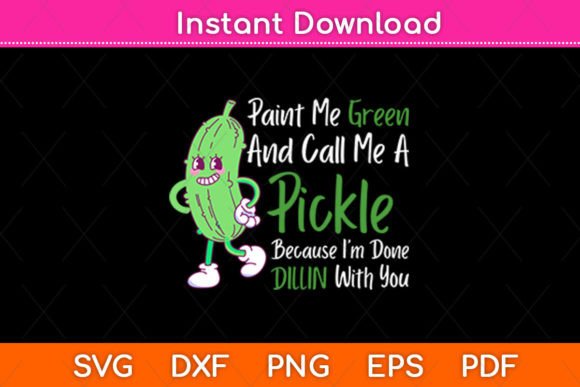
The moment you open the Paint Me Green and Call Me a Pickle Svg, the mood is unmistakably lighthearted and humorous. It leans heavily into the "food pun" trend that has saturated social media and craft fairs for years. From a design perspective, the layout is straightforward: bold typography paired with a recognizable pickle silhouette. For an embroidery project, simplicity is often your best friend. Complex curves and tiny details can turn into thread nests, but this design relies on clean lines and solid shapes.
However, the challenge lies in the text. The phrase "Paint Me Green and Call Me a Pickle" is long. In embroidery, long lines of text require careful attention to stitch density and font weight. If the lettering is too thin, it may not cover the fabric well, leading to gaps. If it is too dense, the fabric might pucker. As I visualize this on a custom apparel item, the visual personality screams "fun gift" rather than "high-end luxury." It fits perfectly into the category of novelty items where humor is the primary selling point.
Real-World Application: A Case Study for a Summer Tote
Let's imagine a real scenario. I have a client running a small shop product line for summer farmers markets. They want to create a collection of canvas tote bags featuring food-themed puns. The Paint Me Green and Call Me a Pickle Svg seems like a natural fit. But how does it actually perform when we move from the screen to the hoop?
If I were converting this SVG into an embroidery file, my first step would be to assess the hoop size. This design is likely wide. Placing it on a standard 4x4 inch hoop might force the text to wrap awkwardly or shrink the elements until they lose their impact. A 5x7 or 6x10 hoop would be more appropriate to maintain the legibility of the text and the charm of the pickle graphic. On a sturdy canvas tote bag, the fill stitch used for the green pickle shape would sit beautifully, provided the stabilizer is robust enough to handle the tension of the thick fabric.
The customer reaction to such a personalized gift or boutique item is usually immediate and positive. People love wearing their sense of humor. However, the success of the finished product depends entirely on execution. If the green thread color clashes with the background or if the white outline (if present) is too thin, the joke gets lost. The design needs to pop. This is where choosing the right thread colors becomes critical. A bright, acidic green against a neutral cream or navy blue tote would maximize the visual appeal and buyer engagement.
Navigating Challenges: Fabric Texture and Placement
While the Paint Me Green and Call Me a Pickle Svg is versatile, it is not without its pitfalls. As a professional reviewer, I must advise caution when using this design on certain materials. Fabric texture plays a massive role in the final outcome. If you attempt this design on a fuzzy fleece sweatshirt or a textured linen apron, the fine details of the text may get swallowed by the pile of the fabric. The satin stitch outlining the letters might sink in, making the message hard to read.
Furthermore, consider the placement. Curved surfaces like caps or the side seams of a baby embroidery onesie can distort the straight lines of the text. The design works best on flat, stable surfaces like the front of a t-shirt, a pillow cover, or a kitchen towel. If you are creating an embroidered patch version of this design, ensure the backing is stiff enough to support the weight of the stitches, especially if the design covers a large area.
Another concern is washing durability. Products like tea towels or aprons undergo frequent laundering. High stitch density areas, particularly in the fill of the pickle, can cause the fabric to stiffen over time. To mitigate this, I always recommend testing the design on scrap fabric first. Check how the threads behave after a wash cycle. Do they fray? Does the fabric pucker? These practical checks are essential for maintaining customer trust and ensuring the longevity of your handmade product.
Practical Designer Notes for Commercial Success
For the Etsy seller or craft business owner looking to monetize this concept, there are several technical steps to take before listing your items. First, verify the licensing terms. The product description states this is an instant download file intended for cutting machines. You must confirm if the license allows for commercial use of the finished embroidered goods. Never assume; check the specific terms to avoid legal issues with your commercial embroidery projects.
Second, test the design in black and white mockups before committing to production. This helps you see the contrast levels clearly. Compare light and dark fabric backgrounds to determine which combinations offer the best readability. Use proper stabilizer—a cut-away stabilizer is often better for stretchy fabrics like t-shirts to prevent distortion, while a tear-away might suffice for rigid items like tote bags.
Finally, inspect small details. In the Paint Me Green and Call Me a Pickle Svg, are there any tiny decorative elements like leaves or stems on the pickle? These need to be thickened slightly in your digitizing software to ensure they stitch out cleanly. Tiny running stitch details can easily break or disappear on textured fabrics.
Conclusion: A Fun Asset with Practical Boundaries
In conclusion, the Paint Me Green and Call Me a Pickle Svg offers a delightful opportunity for designers to create humorous, engaging products. Its simple, bold nature makes it suitable for a variety of Crafts ranging from holiday gifts to everyday wearables. However, its success hinges on the designer's ability to adapt the digital file to the realities of physical stitching. By paying close attention to hoop size, thread colors, and fabric compatibility, you can transform this digital asset into a professional, high-value finished product.
Whether you are creating a sweatshirt embroidery piece for a friend or stocking up inventory for a small shop product line, remember that the best designs are those that balance creativity with technical precision. Test, refine, and then let your customers enjoy the humor. With the right execution, this pickle-themed design can become a standout item in your portfolio of design assets.