Pick Locks Not Fights Career Pick Locks: A Designer’s Real-World Embroidery Review
First Impressions: A Playful, Niche Design with Crafty Charm
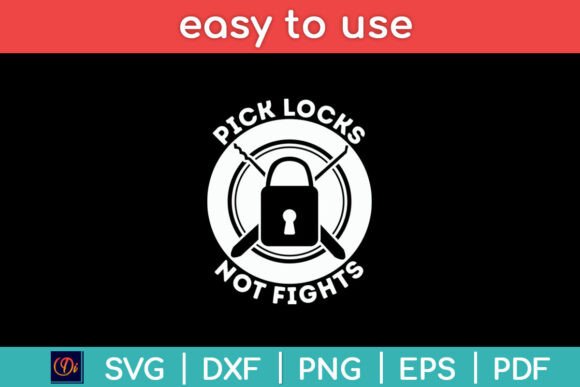
When I first opened the file for Pick Locks Not Fights Career Pick Locks, I immediately recognized its niche appeal. The design is lighthearted and clever, combining a pun with a clear nod to the locksmith profession. Visually, it’s clean and stylized—relying on bold lines and minimal fill work to convey its message. It feels like a perfect fit for a small business owner or Etsy seller looking to add humor and personality to their product line. The layout is horizontal, which makes it ideal for placement on tote bags, sweatshirts, or even patches without requiring major adjustments.
From a design standpoint, the balance between text and imagery is well thought out. The lock and key motif is stylized enough to avoid looking cluttered, while the phrase itself invites curiosity and conversation. It’s not overly detailed, which is a big plus for embroidery applications where too much complexity can lead to stitching issues.
Real-World Use: From Concept to Stitched Reality
I decided to test this design on a few different items to see how it would hold up in actual use. First up: a custom embroidered tote bag. I chose a medium-weight cotton canvas and used a standard tear-away stabilizer. The result was clean, with good stitch definition and minimal puckering. The lettering, though small, held up well, especially considering the design’s compact nature.
Next, I stitched it onto a hoodie for a local locksmith shop looking for staff apparel. I went with a navy fabric and used a light-colored thread for contrast. The satin stitches around the lock graphic came out sharp, and the overall look felt professional yet fun. It’s the kind of design that can elevate a standard uniform into something memorable without crossing into tacky territory.
I also tried it on a baby onesie—more for fun than function. The size scaled well, and even on a smaller hoop, the main elements remained legible. However, I did notice that the tiny lettering became a bit harder to read, so I’d recommend caution when applying this design to very small items.
Where It Shines—and Where to Be Careful
Pick Locks Not Fights Career Pick Locks performs best on flat, stable surfaces like tote bags, tees, and aprons. It works especially well as a boutique-style design for small shops or as part of a themed collection for holiday or promotional items. The simplicity of the design makes it easy to adapt for both light and dark fabrics, provided you choose the right thread colors and backing.
However, there are a few areas where extra care is needed:
- Small hoop sizes: While the design scales down, the fine lettering can become illegible or stitch poorly.
- Stretchy or thin fabrics: These can cause distortion, especially in satin-stitched areas.
- Curved surfaces like caps: The horizontal layout doesn’t adapt well to curved embroidery fields without design tweaking.
- Detailed corners: There are small corners in the lock graphic that may require extra stabilization to prevent pulling or distortion.
If you're planning to use this in a commercial embroidery setting, especially for custom orders, I’d recommend doing a few test runs first. It’s always better to catch issues on scrap fabric than on a customer’s garment.
Visual Appeal and Product Value: Does It Deliver?
One of the most important aspects of any embroidery design is how it contributes to the overall appeal and perceived value of the product. In this case, Pick Locks Not Fights Career Pick Locks definitely adds a unique, personalized touch. It’s not just a generic slogan—it tells a story and speaks directly to a specific audience.
For Etsy sellers or small craft businesses, this kind of design can help differentiate your products in a crowded marketplace. It’s not overly complex, which makes it easy to produce at scale, and the humor adds a level of giftability that many buyers look for when shopping handmade or personalized items.
From a branding standpoint, this design could also be used as part of a larger product line—especially if you're targeting tradespeople or creating novelty items for Father’s Day, birthdays, or employee gifts. The visual clarity and consistent layout make it easy to incorporate into mockups, listings, or packaging without needing to redesign anything.
Designer Notes: What to Watch For Before You Stitch
Before you jump into stitching Pick Locks Not Fights Career Pick Locks, here are a few practical tips I picked up during testing:
- Test on scrap fabric first: Always a good idea, but especially with this design due to the small lettering and satin-stitched elements.
- Check thread color contrast: Dark thread on light fabric works well, but if you’re going for light on dark, make sure the thread is vibrant enough to stand out.
- Review stitch density: The fill areas are minimal, but satin stitches can be dense—watch for thread breakage or skipped stitches on delicate machines.
- Confirm hoop size: Make sure the design fits your hoop with enough clearance to avoid hoop burn or distortion.
- Inspect small details: Zoom in on the file to ensure no fine elements are likely to stitch poorly.
- Test in black and white mockups: This helps visualize how it might look on various fabric colors before committing.
- Use proper stabilizer: A medium-weight tear-away or wash-away stabilizer will give the best results.
- Confirm licensing: If you're selling finished items or digital products, check the license terms to make sure you're within legal bounds.
Final Thoughts: A Worthy Addition to Your Design Kit?
Yes, with a few caveats. Pick Locks Not Fights Career Pick Locks isn’t a one-size-fits-all embroidery file, but for the right niche audience and product type, it delivers strong visual appeal and practical usability. It’s a great example of how a simple, well-thought-out design can enhance a handmade product or personalized gift without overwhelming it.
As an embroidery designer and product reviewer, I appreciate how it balances humor with professionalism. It’s not trying to be overly complex or flashy—it just wants to make someone smile while looking sharp on fabric. And in the world of custom embroidery, that’s a rare and valuable trait.